


Incels aren’t in the manosphere: distinguishing the two is essential to helping them
Robbie Clarkson & Louis Bjerrum Christiansen
1. Introduction
There’s an increasing concern about young men, particularly young men’s online activity in mass media. Questions are raised around hypermasculine influencers like Andrew Tate and Clavicular. What makes these people such popular figures? Who finds their messaging appealing?
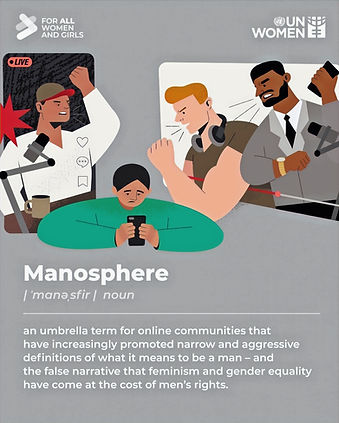
The term “manosphere” is frequently applied to describe this ecosystem of content creators who appeal to young, angry and misogynistic men. In the meantime, prominent TV shows such as Adolescence have popularized another term - “incel” - to describe a similar demographic of young, angry and misogynistic men. While incel communities and the manosphere may look similar from the outside, these two terms describe two groups with very different perspectives and types of misogyny. Understanding these differences is crucial in helping the vulnerable and isolated members of each group.
2. Their similar outward behavior
Both groups have grown tremendously since the mid-2010’s when social media platforms started to implement algorithms that reward engagement and controversy. Incel communities and the manosphere have learned to thrive in this environment. Nothing drives engagement on social media like divisive, bigoted and uninformed statements - especially when they’re related to current trends, memes and drama. Both communities produce very similar content when it comes to reaching new audiences, but despite their similar output, these two communities have quite distinct belief systems.
3. Inceldom
The incel worldview revolves around the simple idea that your romantic future is biologically fixed, and if you aren’t attractive, nothing you do will ever change that. Incels refer to this belief as the “blackpill”. Any doubt of its absolute truth is shamed as “hopium” (a derogatory term for having hope of a romantic future). The blackpill in a way acts as a defense mechanism. If loneliness is a biological inevitability, you can experience rejection without it damning your character. The blackpill doesn’t offer a solution and simply provides validation for the despair. This can be seen in incel-communities, where members post pictures of themselves and write about their unsuccessful interactions with women, their loneliness and their fears. Other community-members respond to these posts, by reinforcing the overarching narrative that they are ugly, that women are superficial bitches and thus, they’re all doomed. The blackpill symbolizes a very fragile worldview that most incels drift away from quite quickly, because at some point reality will contradict the idea that “nothing can ever change”.
4. Manosphere
While incels feel doomed to a fate impossible to improve, the content of the manosphere hails self-improvement as the key to success. Within a ‘competitive market’, maximising ones’ looks, money, and status (often abbreviated to LMS) is the only path to success in dating. Improvement of one’s sexual marketplace value (SMV) is achieved via working out, “looksmaxxing” (i.e. engaging in behaviours and practices that allegedly improve appearance), and promoting a “grindset”, which is the mentality of wanting to do anything to increase your SMV. In other words, the manosphere ideology adopts a capitalist framework to dating, where hard work towards a conservative ideal of masculinity leads to love. Content creators such as Clavicular and Andrew Tate present a ‘desirable’ life of wealth, sexual desire, and respect from others, and sell this world-view to a vulnerable audience. The message is clear; if you are not successful, you just aren’t working hard enough yet.
5. Why does the difference matter?
Looking at the two groups side-by-side highlight key differences between the ideologies and the types of vulnerabilities those attracted to them possess. Both groups hold high levels of insecurity, but the ways it respectively manifests are distinct.
Incels isolate themselves, because they’re scared of (further) rejection, and seek connection through a common reactionary ideology and by sharing experiences that reinforce said ideology. What incels need is healthy human connection. The realization that physical appearance isn’t the only deciding factor for successful interactions will come eventually - even in interactions with women.
On the other hand, young men affiliated with the manosphere hold a more solidified worldview. While incel ideology may be disrupted through successful interactions, the manosphere worldviews require deep critical reflection in order to be overturned. Their problem is not loneliness, but assuming a worldview that reduces dating to transactions. Simply striving towards more sexual marketplace value may increase their confidence and sexual success on a surface level (as is ideologically sold to them), but critical thinking could reveal the unsustainable nature of their superficial ‘self-improvement’ mentality.
6. Conclusion
Young men today find themselves in uncertain territory. Norms around gender roles are shifting, and expectations have not necessarily changed at the same rate. Online dating has changed people’s perception of dating, reframing it as a marketplace. Meanwhile economic uncertainties are pressuring people to work harder while positing that a person’s success is their own responsibility. These are all vectors of uncertainty in an already confusing landscape making the contemporary dating ‘market’ a source of insecurity for many. Inceldom and manosphere content provide relief from these issues of insecurity in opposing ways. Inceldom relieves the individual of their responsibility for their dating success, taking a fatalist approach to blaming their attractiveness, while the manosphere presents self-discipline as the solution to insecurity with influencers serving as evidence that hard work will return a particular lifestyle that includes success with women. Understanding the difference in the two ideologies is crucial in navigating the increasingly prevalent discourse surrounding helping those most vulnerable. Within both worldviews however, there is no ‘one size fits all’ solution as a diverse demographic may find themselves engaging with the various perspectives. What remains essential is to continue to have open-conversations about the emotional vulnerability of young men, particularly in relation to their behaviours online. Without adequate understanding of the issues at hand, intervention becomes impossible.
©UNWomen
About the Authors

Robbie Clarkson (they/them)
With a diverse palette of interests, Robbie is most passionate about Gender and Sexuality (with a particular focus on Queer Studies) as well as research of the internet behaviour.
Robbie loves utilising both their quantitative and qualitative skills in their research; Robbie is looking forward to their next qualitative research project on the local environmental engagement within Bristol.
Outside of academia, Robbie is a powerlifter, karate black belt, and also spends a lot of time drawing and being creative.
Year of Study: 4th
Degree: Sociology with Quantitative Research Methods with Study Abroad

Louis Bjerrum Christiansen (he/him)
During Louis' studies, he has primarily worked with online
media, digital culture and extremist social movements. Louis enjoys applying both qualitative and quantitative methods to
get the best understanding of the mechanisms in these
topics.
Outside academia, Louis enjoys playing chess, football and
exploring different genres of music.
Year of Study: Second Year
Degree: Masters in Sociology