


Researcher Interview
Robbie Clarkson & Louis Bjerrum Christiansen
Describe your article in five words?
Louis: True nihilism makes inceldom distinct.
Robbie: Effective support requires nuanced understanding
Favourite part of the research process?
Louis: I think the most interesting part of any of the research processes that I’ve been a part of is, when I suddenly realize, that I’m wrong in my initial assumptions. The challenge then becomes to be content with not knowing what’s true, while analyzing further and reading more theory. That process can both be frustrating and incredibly satisfying, when the pieces of the puzzle eventually fit together.
Robbie: I really agree- going in with one opinion and slowly realising the misinformation that opinion is grounded in is a really transformative experience
Least favourite part?
Louis: I did not enjoy feeling like I genuinely had something worthwhile to share with the world, but not knowing if I’d be able to. After having worked on the article for a while, the distinctions had become so clear to me, and it became frustrating to see people make inaccurate statements about incel-culture. Not that the article in and of itself has changed that, but I at least feel like I have contributed with my point of view and have done what I could.
Robbie: Behind the scenes, there was a lot of frustrating and brain-hurting challenges we came across while trying to develop our own conceptualisations of incel-dom and whilst trying to put them into comprehensive and accessible words. Knowing you have an idea and trying to find the right words to express it was, at times, frustrating to say the least
Explain the project to a child?
Louis: While some men easily find love, others struggle a bit with it. Those who struggle might think it is because women do not find them attractive, which makes them mad at women. On the internet they find other mad men with whom they share stories and pictures of themselves and make up terms to describe why they in fact aren’t attractive. Another group of men who also struggle a bit with finding love think it’s because they aren’t strong or rich enough, so they work a lot and lift weights. Often, they are being told to do so by social media influencers. These two groups are very different.
What was it like collaborating with another researcher on a paper?
Louis: It was essential. Incel-culture is at times so ridiculous that I believe I would’ve started to second-guess myself, if I didn’t have someone to discuss it with. We often found ourselves dumbfounded together, which made for some fruitful theorizing discussions and some even better jokes. I found the humor to be essential as the empirical material often revolved around terrible trauma and neglect.
Robbie: Agreed. I certainly couldn’t have done it alone. Knowing that, when you feel like you’ve hit a wall with the project, you can rely on someone else to carry on until you see a way forward kept both of us motivated (and sane). It was the first time I had ever worked 1-1 with someone else on a project like this and I now would be really eager to do so again.
How did you have the idea to do research together?
Louis: I didn’t know Robyn yet, but I heard that they wanted to work on something similar to me, so I simply asked them if they wanted to collaborate. I had a pretty good idea that the topic would be somewhat devastating to work with alone.
Robbie: The topic was first proposed by me but the approach and theory side of it was definitely Louis’ suggestion. That side of the project felt awfully intimidating and, while I knew I had a good idea that I wanted to investigate, I can’t express the relief I felt when Louis asked to collaborate!
What is your advice for young researchers who want to put together a project like this?
Louis: You only truly know, what your contributions are, once you’ve rewritten the entire paper from scratch. But the feeling of having something to contribute comes before that. So, perhaps if you find yourself disagreeing with papers or even popular media’s use of certain terms after having worked on it yourself, you might be onto something – even if you’re not entirely able to put it into words yet.
Robbie: If you have a topic or area that you know you want to investigate - talk to people about it! Talk to your professors who might ask the question that sparks your investigation. Talk to your friends and peers and find out what people know about and, importantly, what they don’t! Any conversation might be the one that highlights what you path you really want to go down
What did each you bring to the project that you might not have been able to contribute alone?
Louis: We actually work in very similar ways, so I wouldn’t make a clear distinction in our ways of contributing. Rather, I’d say we both helped each other to re-group whenever we were stuck. Discussing things when we were confused helped, and body-doubling helps to get through the tough parts.
Robbie: I think we write in pretty distinctive ways that mesh together really nicely. We would often write a section, knowing it wasn’t as good as it could be, and then allow the other one to re-write it in whatever words they felt best. The result was often far better than what either of us could have produced by ourselves
What is one thing about your findings that surprised you?
Louis: How I have come to understand incels as a sort of marginalized group of people. They are often neurodivergent and/or have had traumatic experiences that accurately could be characterized by poverty, abuse, and neglect. The incel worldview is not one healthy men adopt. While I don’t condone of their output, which is misogynistic and hateful, I empathize with their unfortunate life-circumstances and find it to be powerful, how many of them make it out of in spite of their misfortune.
Robbie: I completely agree. The way that the term incel has evolved into a term of insult for men (teenagers especially) is really concerning given the frequent backgrounds of neglect and mistreatment
What direction would you like future research on incels to go in next based on your findings?
Louis: Given that inceldom for most men is a phase in their teenage-years, perhaps, research should focus on one of two things. Either look at potential avenues to decrease the unhealthy behavior and suicidal tendencies within the community or look at ways to limit the impact or reach of their hateful output and all the unnecessary suffering that causes.
Robbie: I think a revitalised approach to sex education is one of the biggest ways of addressing the issues at hand. There is a significant lack of awareness and addressing of the social issues and aspects of sex. This could include a huge range of topics including discussions of consent, communication, and the shame that can be associated with sex. Further research ought to investigate how to make sex education far more inclusive of these more social aspects of intimacy
What do you think about the role of AI in research?
Louis: I see great potential, but I generally remain critical. While I'd like to focus on the groundbreaking insights it might entail, I have to admit that nothing leaves me with a bitter taste like a case of AI hallucinations in a scientific article.
Robbie: With such socially sensitive issues such as incel-dom where there is a lot of widespread misinformation, I am very skeptical about the extent to which AI is useful.
©UNWomen
About the Authors
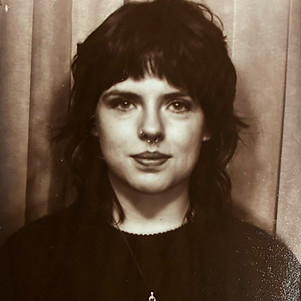

Robbie Clarkson (they/them)
With a diverse palette of interests, Robbie is most passionate about Gender and Sexuality (with a particular focus on Queer Studies) as well as research of the internet behaviour.
Robbie loves utilising both their quantitative and qualitative skills in their research; Robbie is looking forward to their next qualitative research project on the local environmental engagement within Bristol.
Outside of academia, Robbie is a powerlifter, karate black belt, and also spends a lot of time drawing and being creative.
Year of Study: 4th
Degree: Sociology with Quantitative Research Methods with Study Abroad

Louis Bjerrum Christiansen (he/him)
During Louis' studies, he has primarily worked with online
media, digital culture and extremist social movements. Louis enjoys applying both qualitative and quantitative methods to
get the best understanding of the mechanisms in these
topics.
Outside academia, Louis enjoys playing chess, football and
exploring different genres of music.
Year of Study: Second Year
Degree: Masters in Sociology